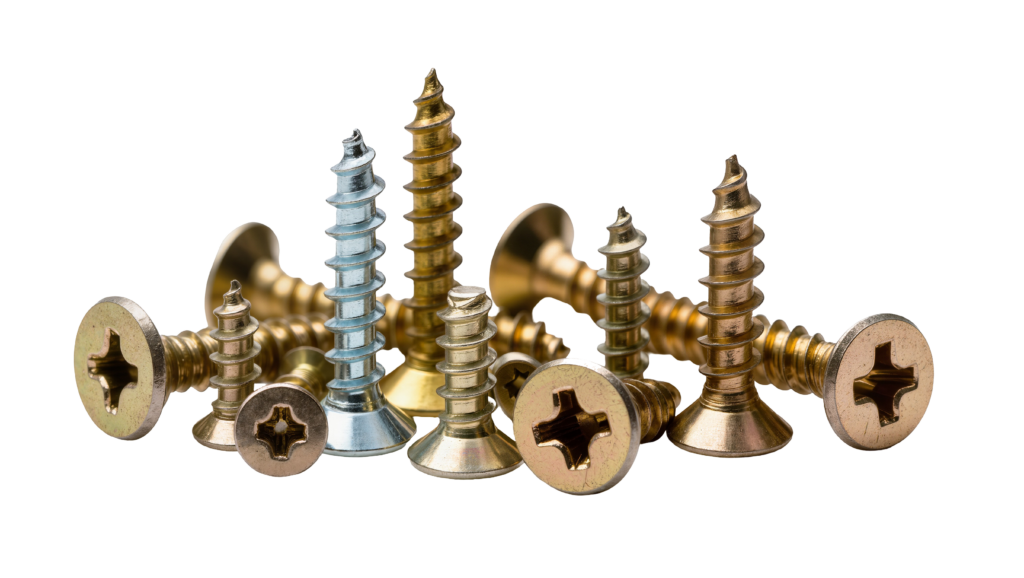
N E Fasteners, the home of Premium Coach Screws. Choose from traditional bright zinc DIN 571 coach screws and advanced yellow-passivated coach screws with a hex flange head. The range covers options for timber-to-timber, metal-to-timber and suitable plugged masonry applications.
Buy coach screws online through Screwshop and check the live range for current sizes, pack quantities, prices and availability.
Range Highlights:
- Two coach screw designs
- Multiple sizes and pack quantities
- Online ordering through Screwshop
Product Selector
Choose Your Coach Screw
Choose between the traditional DIN 571 format and an advanced yellow-passivated option designed for power-tool installation. Check the live Screwshop listings before ordering to confirm current sizes, pack quantities and product details.
Zinc Coach Screws
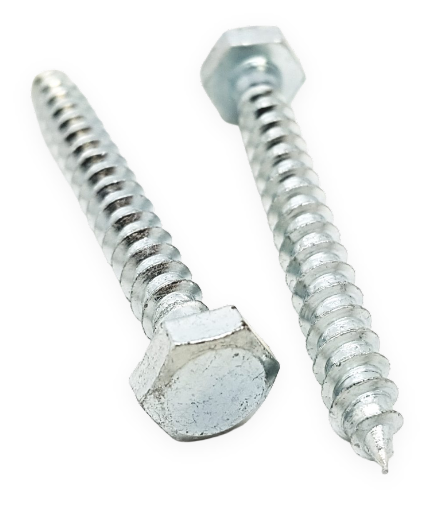
Traditional zinc coach screws have a standard external hex head, coarse thread, pointed profile and bright zinc-plated finish. They conform to DIN 571, a dimensional standard that defines the product format. DIN 571 does not represent a load approval, corrosion class, ETA, UKCA or CE claim.
These coach screws provide a familiar option for timber connections, joinery, construction, fencing and suitable plugged masonry applications. Bright zinc is best positioned for dry, internal, protected or sheltered conditions.
Key Features:
- Standard external hex head
- Coarse coach screw thread
- Traditional pointed profile
- Bright zinc-plated finish
- DIN 571 dimensional conformity
- Suitable for timber and correctly plugged masonry, subject to fixing selection
Yellow Coach Screws
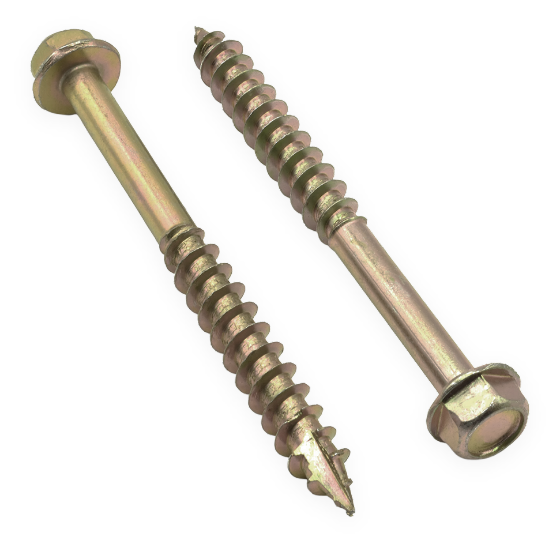
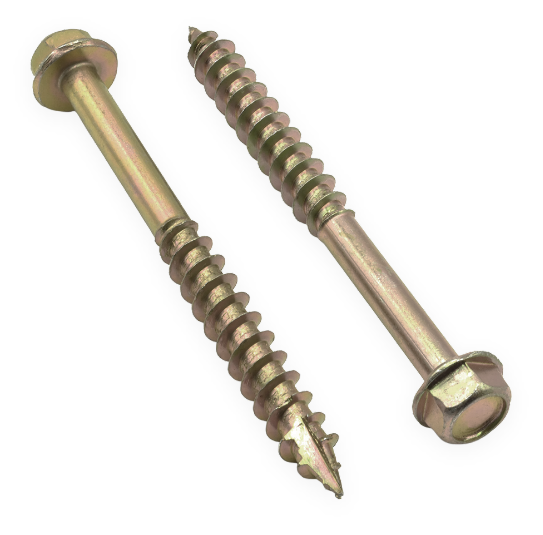
Yellow coach screws have a hex flange head, single coarse thread and single slash point. They are compatible with suitable power tools and are intended to support easier driving while reducing the likelihood of timber splitting.
The manufacturer or supplier promotes this option as driving up to three times faster than a standard coach screw. Actual results depend on the screw, substrate, tool and installation conditions.
The range may be used in softwood, hardwood, man-made board and suitable plugged masonry, subject to screw size, substrate, installation and connection design. Selected packs may include a socket driver. Check the SKU details before ordering.
Key Features:
- Hex flange head
- Single coarse thread
- Single slash point
- Power-tool compatible
- Point intended to support easier driving
- Flange may reduce the need for a separate washer in some applications
- Selected packs may include a socket driver
Product Definition
What Is a Coach Screw?
A coach screw is a large wood screw with an external hexagonal head, coarse thread and pointed end. It is used to form a fixing in timber or a suitable plug and is normally driven with a socket, spanner, ratchet or matched power-tool socket rather than a screwdriver.
Coach screws are commonly used for timber-to-timber and metal-to-timber connections. In masonry, they require a correctly matched nylon plug or another approved fixing system.
Unlike a coach bolt, a coach screw does not normally pass through the full assembly and secure with a nut. Its coarse thread forms a fixing in the receiving material. Longer screws may have an unthreaded shank between the head and threaded section.
Coach screws may also be called lag screws or lag bolts, particularly outside the UK. On UK product pages, “coach screw” should remain the main term.
Product Comparison
Zinc or Yellow Coach Screws: Which Should You Choose?
Choose the zinc option for a traditional DIN 571 coach screw format. Choose the yellow option where a flange head, slash point and power-tool-compatible installation suit the job. Finish colour alone is not enough to select a fixing. Consider the substrate, connection, environment, screw dimensions and installation method.
| Comparison point | Traditional zinc coach screw | Advanced yellow coach screw |
|---|---|---|
| Head | Standard external hex head | Hex flange head |
| Point | Traditional pointed profile | Single slash point |
| Thread | Coarse coach screw thread | Single coarse thread |
| Finish | Bright zinc plated | Zinc and yellow passivated |
| Standard | Conforms to DIN 571 | Do not apply DIN 571 unless confirmed for the SKU |
| Installation | Socket, spanner or suitable tool | Compatible with suitable power tools |
| Driving position | Traditional coach screw format | Faster-driving option |
| Splitting position | A pilot hole is commonly considered | Point is intended to reduce the likelihood of splitting |
| Washer | May be required | Flange may reduce washer need in some applications |
| Substrates | Timber and suitable plugged masonry | Timber, man-made boards and suitable plugged masonry |
DIN 571 describes product dimensions. It does not provide a universal load rating or structural approval. The yellow product’s flange may spread bearing pressure across a wider area, but it does not remove the need for a washer in every connection. Follow the product information and connection requirements.
Applications
What Are Coach Screws Used For?
Coach screws are used for substantial timber-to-timber fixings, attaching metal components to timber and selected plugged masonry applications. The correct product depends on the material, connection design, screw dimensions, environment and installation method. Common applications may include:

Timber-to-timber connections
Coach screws can join substantial timber sections where the fixing and connection have been selected for the job.

Metal brackets, plates and straps
For cabinet, furniture and interior woodworking where the selected size and drive suit the material.

Fencing and gates
For MDF assembly and related timber-based board work, with suitable edge distance and fixing preparation.
Pergolas, gazebos and garden structures
Coach screws may be used in suitable timber connections within pergolas, gazebos and related structures.
Deck substructures
They may be considered for parts of a timber deck substructure where the finish, fixing and connection are appropriate.

Sleepers and landscaping timbers
Coach screws can be used for selected timber sleepers, landscaping timbers and related connections.

Stairs and roof timbers
Possible applications include selected stair and roof timber connections where the fixing has been properly assessed.
Agricultural timberwork
Coach screws may suit selected agricultural timberwork, gates, rails and timber fittings.
Timber Installation
How to Install Coach Screws in Timber
Install a coach screw by selecting the correct product for the connection, preparing the timber where needed and driving the screw with a matched socket or spanner. Pilot-hole and clearance-hole requirements vary by screw design, diameter, timber and connection position.
- Position the components and clamp them where required.
- Confirm the screw diameter, length and required embedment.
- Drill a clearance hole through the first component where the connection calls for one.
- Drill a pilot hole into the receiving timber where required.
- Fit a washer where the surface, head design or connection requires one.
- Drive the coach screw with a correctly matched socket, spanner or suitable power tool.
- Tighten until secure without crushing the timber, damaging the head or stripping the fixing.
Do coach screws need pilot holes?
Coach screws may need pilot holes, particularly in dense, brittle, seasoned or narrow timber, near edges and ends, or when using larger screw diameters. The correct pilot-hole size depends on:
- Screw diameter
- Thread design
- Timber density
- Timber moisture
- Edge and end distance
- Required embedment
- Manufacturer guidance
The slash point on the yellow option is intended to reduce the likelihood of splitting and may reduce preparation in some applications. Pre-drilling may still be advisable. It does not guarantee that timber will not split.
Do not use a generic pilot-hole diameter without checking the product and timber guidance.
Masonry Installation
Can Coach Screws Be Used in Brick or Concrete?
Yes. Coach screws may be used in suitable brick, concrete block, solid concrete, dense masonry or suitable stone when paired with a correctly matched nylon plug. The screw must not be driven directly into masonry unless an approved fixing system is designed for that method.
Do coach screws need pilot holes?
Coach screws may need pilot holes, particularly in dense, brittle, seasoned or narrow timber, near edges and ends, or when using larger screw diameters. The correct pilot-hole size depends on:
The plug must be compatible with:
- The coach screw diameter
- The drilled-hole diameter
- The substrate
- The required embedment
- The applied load
- The installation conditions
- Select a compatible coach screw and nylon plug.
- Drill the diameter and depth stated by the plug manufacturer.
- Remove loose drilling debris from the hole.
- Insert the plug fully.
- Position the timber or fitting.
- Drive the coach screw with a matched tool without overtightening.
A coach screw and nylon plug must not automatically be treated as a structural masonry anchor. Structural, overhead, safety-critical or high-load installations require a fixing system supported by suitable test data and competent selection.
No universal wall-plug table should be used because compatibility varies between manufacturers, substrates and product ranges.
Coach Screws and Coach Bolts
Coach Screws vs Coach Bolts
Coach screws and coach bolts are different fasteners. A coach screw has a pointed end and coarse wood thread that forms a fixing in timber or a suitable plug. A coach bolt normally passes through the connected parts and is secured with a nut.
| Coach screw | Coach bolt |
|---|---|
| Pointed tip | Usually has a blunt end |
| Coarse wood thread | Machine thread |
| Drives into timber or a suitable plug | Passes through the connected parts |
| Usually fitted without a nut | Secured with a nut |
| External hex head | Commonly has a domed head with a square neck |
| Often installed from one side | Usually requires access from both sides |
The terms should not be treated as interchangeable on a UK product page. Some international sources use “lag bolt” as another name for a coach screw, but this does not make it the same product as a UK coach bolt.
One type is not always stronger than the other. Connection strength depends on the fastener material and dimensions, timber or substrate, embedment, edge distances, connected parts, loading direction and installation quality.
Finishes and Environments
Coach Screw Finishes and Suitable Environments
The finish helps protect a coach screw, but neither supplied finish should be described as rust-proof. Select the fixing according to the environment, timber, expected moisture exposure and available product data.
Bright zinc-plated coach screws
Bright zinc plating provides a degree of corrosion resistance. These screws are best positioned for dry, internal, protected or sheltered conditions.
Bright zinc plating is not the same as hot-dip galvanising or stainless steel. Do not use appearance alone to assume exterior, coastal or long-term wet-use suitability.
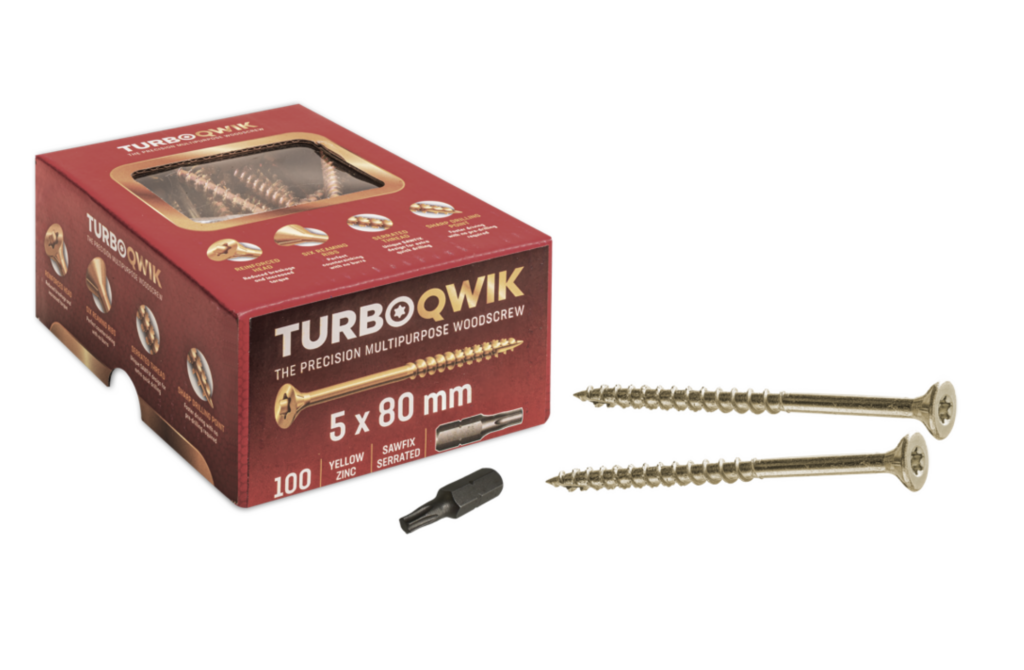
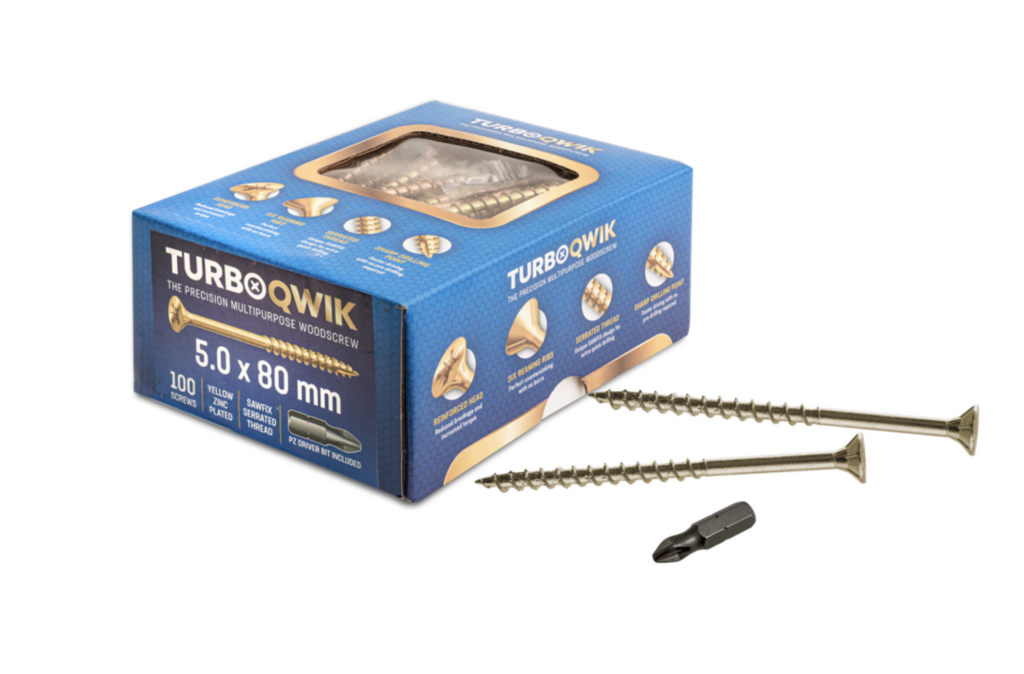
Torx TurboQwik screws
The yellow-passivated finish is intended to provide corrosion protection. One reviewed 8 × 60 mm product specification records a corrosion rating of 2 out of 5, but this rating must not be applied to every size or SKU without confirmation.
Do not position either range as suitable for marine, coastal, permanently wet or highly corrosive settings without supporting test data.
Sizes and Packs
Coach Screw Sizes and Pack Options
N E Fasteners supplies coach screws in multiple diameters, lengths and pack quantities. The available combinations vary between zinc and yellow products and may change by SKU.
Use the live Screwshop range to check:
- Diameter
- Length
- Thread length
- Head or socket size
- Pack quantity
- Pack quantity
- Current stock
- Current price
- Whether a socket driver is included
Selected yellow coach screw packs may include a socket driver. Check the individual product listing before purchase.
Static size examples should not be treated as the complete range. Screwshop is the current source for available products and purchasing information.
Why N E Fasteners
Why Buy Coach Screws from N E Fasteners?
N E Fasteners combines specialist fastener supply with a clear choice between traditional zinc DIN 571 coach screws and advanced yellow coach screws.
Reasons to buy through N E Fasteners:
- Specialist fastener supplier
- Established in 1985
- Privately owned and family-run
- Traditional zinc and advanced yellow product options
- Multiple diameters, lengths and pack quantities
- Online ordering through Screwshop
- Contact route for trade and supply enquiries
For this page, “premium” refers to clear product choice, well-defined product distinctions, buying information and access to specialist supply. It does not represent a certified strength, corrosion or performance grade.
Frequently Asked Questions
Coach Screw FAQs
A coach screw is a large, coarse-threaded wood screw with a pointed end and external hex head. It forms a fixing in timber or a suitable plug and is driven with a socket, spanner, ratchet or matched power-tool socket.
Coach screws are used for timber-to-timber connections, fixing metal brackets or plates to timber and selected masonry applications with a correctly matched nylon plug. Suitability depends on the complete connection, substrate, environment and installation.
They may do. Pilot-hole requirements depend on the screw diameter and design, timber density and moisture, edge position, embedment and manufacturer guidance. Pre-drilling is often considered for dense, brittle, seasoned or narrow timber and near edges.
Only in masonry or another substrate that requires a plug or approved fixing system. Coach screws normally form their thread directly in timber. For brick or concrete, use a nylon plug matched to the screw, drilled hole, substrate and applied load.
Yes, when used with a correctly matched nylon plug in a suitable masonry substrate. Do not treat the pairing as a structural masonry anchor without supporting test data and competent fixing selection.
A coach screw has a pointed end and coarse wood thread that forms a fixing in timber or a plug. A coach bolt normally passes through the connected parts and is secured with a nut.
No. Zinc plating provides a degree of corrosion resistance but is not rust-proof. Bright zinc is best positioned for dry, internal, protected or sheltered use unless product data supports another environment.
There is no universal load figure. Capacity depends on the screw material and dimensions, substrate, embedment, edge distances, loading direction, connected parts and installation. Load-bearing or safety-critical connections require suitable product data and competent assessment.
A washer may be required to spread bearing pressure, protect the surface or meet the connection design. A flange head may reduce the need for a separate washer in some applications but does not remove it in every case.
The advanced yellow option is compatible with suitable power tools. Use a correctly matched socket and controlled settings. Do not assume unrestricted speed or torque, and avoid overtightening or damaging the timber and fixing.
Shop Premium Coach Screws
Choose traditional zinc DIN 571 coach screws or advanced yellow coach screws with a hex flange head and slash point.
Shop through Screwshop to view current sizes, pack quantities, prices and stock. Contact N E Fasteners for trade, retail or supply enquiries. N E Fasteners Ltd is a privately owned, family-run fastener supplier established in 1985.